
Fit and comfort are two big factors cyclists should consider when buying bikes and bike accessories.
That means the fit of your bike pedals shouldn’t be treated any differently than your bike.
Choosing a pedal can be overwhelming because there are so many choices available.
In this article, I’ll provide a buyer’s guide along with reviewing best road bike pedals.
Best Clipless Road Bike Pedals in 2023
- Shimano Ultegra PD-R8000
- Look Keo Blade Carbon Ceramic
- Look Keo 2 Max
- Shimano 105 PD-R7000
- Speedplay Zero
- Time XPro 10

1. Shimano Ultegra PD-R8000 – Best Clipless Road Bike Pedals
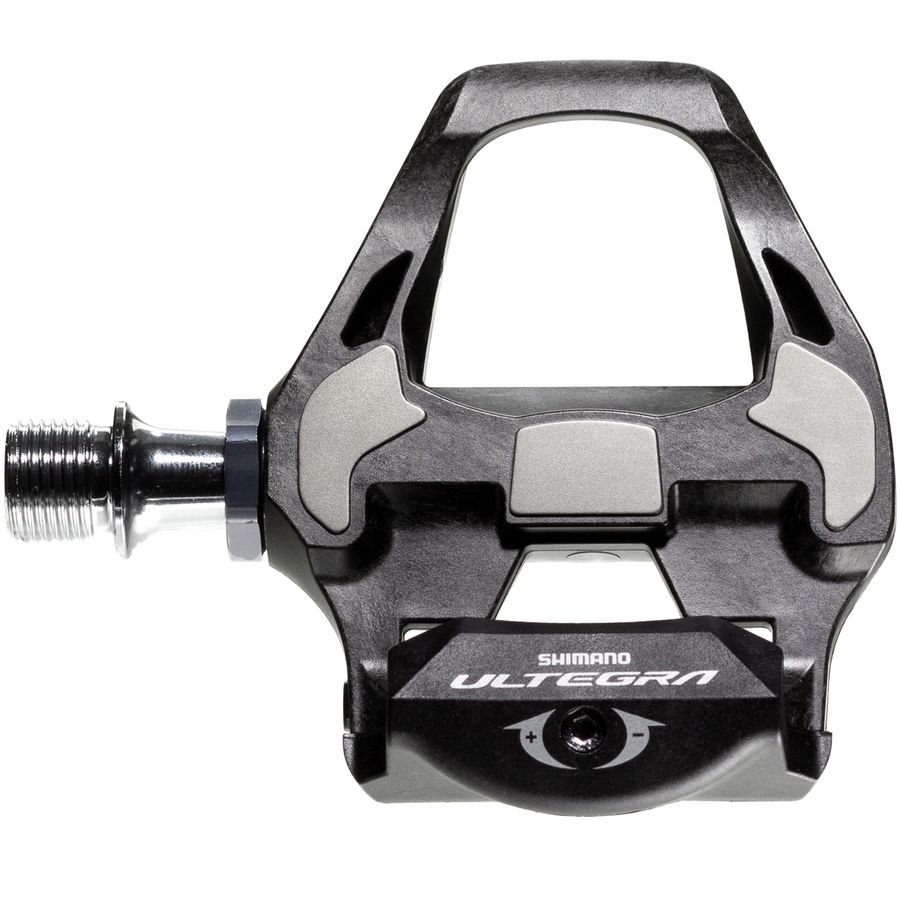
The Shimano Ultegra pedals offer high-level performance to any level of rider.
The pedals are made from carbon composite which is a good option for those who are trying to take the weight off their bikes.
If beginners want a pedal that will last a long time, this might be a good option for you. The pedal is extra -wide to provide a huge platform for clipping in. This would help you when you’re coming out of transition, starting a criterion, or just leaving a stoplight. You won’t have to question where the pedal is or if you’re on the right side, you’ll clip in and be on your way.
The cleat for this pedal was also upgraded to keep up with busy, racing cyclists. The pedal and cleat work together to create a more efficient power transfer. So, you’ll want to be sure you upgrade your cleats with the pedals.
The extra-wide platform also offers a more efficient power transfer and the pressure is evenly distributed. This means there isn’t any energy wasted while you’re pedaling on the bike. If you spend hours in the saddle, this could help reduce any soreness you feel.
The pedal is made from durable steel body plates that will make the pedal last for years. This reduces the flex and wear to the pedal so you’ll always have a smooth surface to clip into. And, even gives you a smooth float which will make your feet feel even more comfortable.
The pedal has wide bearing placements to give you a stable and reliable load placement, which extends the life of the bearings and keeps you rolling smoothly.
The pedal has adjustable entry and release tension so you can customize to what fits best for you and your riding needs.
Cyclists who have bought these pedals like them because they feel stable while they are clipped in. And, they hang well when you need to unclip at a stoplight or in transition. This makes it easier to clip back in and continue riding. Cyclists also say that walking on concrete with the SL cleats is much easier than the SPD cleats. This is a huge improvement for those who don’t do flying mounts and dismounts. Lastly, everyone loves how lightweight these pedals are and the lower stack height.
I strongly recommend this pair of pedals to any level cyclist. You get the most for your money and the pedals last a long time. If you need a lightweight pedal that is easy to clip in, these might be a good option to consider.
2. Look Keo Blade Carbon Ceramic – Best Road Bike Pedals for Racing

The Look Keo Blade Carbon pedals were made for those who want to speed through the course. The whole pedal was been redesigned to be more aerodynamic and durable.
The pedals weight around 100 grams each without the cleats and hardware, which makes it one of the lightest and smallest pedals available to you.
The technology and design behind the pedal are complemented by the advantages of ceramic bearings. All in addition to the company’s optimal power-to-weight ratio.
The ceramic helps you ride faster and last longer in the saddle. To create this, each ball is precisely measured and then adjusted according to size to make a flawlessly- adapted ring. The bearings are rounder and harder than traditional balls and are less responsive to dust and other debris. This means you can rely on them for consistent performance. Additionally, ceramic is not susceptible to corrosion.
The ceramic is also smoother than other materials for bearings. This will make for a smoother ride and reduces frictional forces when weight is applied to the bearing.
The “blade” look is what makes the pedals light in addition to it being made of carbon. The blade “bows out” when you unclip which means it takes less effort to unclip and makes it easier to clip back in. Once clipped in, the pedals offer secure support for your feet.
Cyclists who have bought these like them because the carbon blade is different from the spring and has a wider base. There will be a small adjustment period for clipping in and out. It’s not hard to clip in and out just feels different. After the adjustment period, all cyclists say the pedals are smooth and support their feet very well. For those who have had the pedals for a while, they report that they are durable and worth the money.
I’d recommend this pair of pedals to those who want a lightweight pedal and want to try the carbon blade design. Keep in mind it’s slightly different than a pedal with a spring so there will be a small adjustment period.
3. Look Keo 2 Max – Best Road Bike Pedals for Beginners
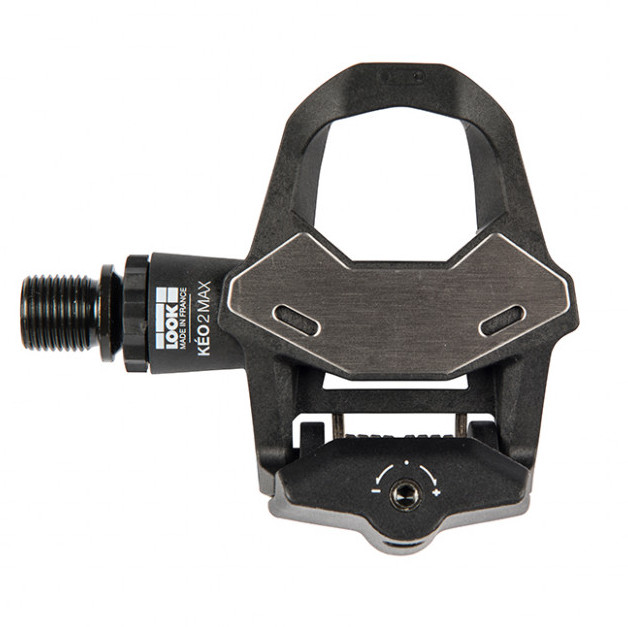
The Look Keo 2 Max is the widest pedal on the market right now. This makes it easier for cyclists, especially beginners, to clip in and out, but also provides a large area for optimal power transfer from your feet to the drivetrain.
Compared to the Keo 1 Max, this one created a bigger platform width to 60mm, without sacrificing the pedal’s cornering advantages. In fact, the pedals offer great cornering clearance since it has a narrower bottom than the Keo 1 Max.
The pedal is more durable than its original. Look created this pedal with a stainless steel wear plate at the center of all the carbon. This means you won’t need to upgrade your pedals for quite a while.
The stack height is also lower than the Keo 1 to keep you closer to your bike and giving you the best transfer to the drivetrain.
The cleats have a compact design to make the total weight of the cleat and pedals as low as possible. You won’t need to worry about shoe compatibility since the cleats will fit any cycling shoe on the market. The cleats are made in three different float options that range from 0 to 9 degrees. Pick whichever feels the most comfortable for you.
Cyclists who have bought these pedals have mixed reviews. Some say that it fulfills their every need, but others have had some issues with them. One being clipping in and out, Cyclists have reported that clipping out of the pedals takes considerably more effort. This is fine if you don’t have to clip out more than once on a ride, or are riding on the trainer. But for road riding, it becomes a problem since you’re clipping in and out frequently. For those who have tried both the carbon and the steel, they report no significant difference between the two. Most say that you can save your money on the carbon version.
I’d recommend these if you need an “average” pedal that will keep your feet glued to the pedals. This option would be ideal if you’re concentrating on cycling next season but it won’t be great if you need to do quick transitions.
4. Shimano 105 PD-R7000 – Best Value Road Bike Pedals

The Shimano 105 pedals are made from lightweight carbon composite, which makes it one of the lightest on the market at 265 grams on average.
Additionally, the pedals also have a stainless-steel body which is durable, reduces flex, and keeps the pedal free of wear and tear.
The extra-wide platform gives you a better base for a more efficient pedal stroke and power transfer. And even helps keep the pedal secure and evenly distributes the weight you put on it.
All of these designs are backed up with Shimano’s DSL technologies. The pedals are specifically and carefully designed to work with Shimano footwear and cleats. This ensures that you get the optimal power transfer from your feet to your drivetrain. While it may seem frustrating to buy a new set of shoes and cleats with the pedals, it’s worth the money. Shimano designed its cleat to get results.
The extra-wide platform as mentioned before gives a great base to evenly distribute power. But it also is reliable. No matter what weather or road condition you’re riding in, you’ll be able to confidently ride through it and corner those tight turns.
The pedal also has an adjustable entry and release tension. This is perfect for any level of a rider especially beginners. You can adjust as you get more comfortable in the pedals. And if you need to feel more secure, the pedals give you that option.
Cyclists who have bought the pedals like them because they are relatively light and very easy to clip in and out of. And, the pedals even come with a pair of cleats so you won’t have to buy them separately. The “yellow” version of the cleat comes with the pedals. There might be a chance you need to buy new ones if those don’t work. Cyclists also report that the pedals are easy to install if you have all the tools handy. On the road, most say the pedals are smooth and they feel like they’re going faster.
I’d recommend these pedals if you need ones that are easy to use and install. They’ll help you as you become more comfortable on the bike. But there are lighter pedals on the market. Having said that, you can rely on these for years and be a great back up pair if you decide to “upgrade”.
5. Speedplay Zero – Best Speedplay Pedals

These pedals are the “lollipop” shaped ones that are made from chrome-moly and have a 0-15-degree float.
The dual-sided feature sets this pedal apart from other ones on the market. The pedal self-locates whenever you step down into the cleat- no matter where in the rotation your pedal is. This means you won’t be kicking or fumbling or looking for your pedals anymore.
The pedals give a choice of a micro-adjustable float or a fixed position. The pedal’s float range is from 0 to 15 degrees and can be adjusted down to a micrometer for your specific needs.
What makes this pedal system even more unique is its adjustment system. All three foot-axis adjustments can be made independently without affecting the other two. You can adjust the pedal system to fore-aft, side-to-side, and rotational foot positions.
The pedals have the lowest stack height to position your feet are even closer to the bike. This, of course, improves your power transfer monumentally.
Although the pedals look smaller than what you might be used to, it does provide a stable platform. The difference being the pedal’s inverted design, which becomes the platform once you’re clipped in.
The cleats are made from a rubber material, which makes it easy to walk in. And, if you’re racing in wet conditions, you’ll be less likely to slip getting on the bike and getting into T2. The cleats also come in different versions that are either three or four bolts for road bike shoes. Again, made of rubber to make transitions easier.
The rubber part of the cleat stays on while you’re on the bike and when you’re walking around it has good traction. This rubber also protects the cleats from normal wear and tear. The last feature of the cleats is the design. It is thin and contoured to the shoe so you can walk normally in them.
Cyclists and triathletes who have bought these pedals love them because they are the smallest, lightest, and easiest to clip into. Cyclists say that the pedals give them so much customization that some of their knee issues have gone away. Since the pedals are so small, it makes cornering easier than ever. The cleats are unique and there’s a version for every rider. Most triathletes who have had problems slipping on the wet ground report that they can confidently run in the transition now.
I highly recommend these pedals to those who want a light and easy to use pedal. Or, those who want one where they can customize a lot of it to fit their unique cycling needs. The cleats make a huge difference for those who want to have faster transition times or want ones that are easy to walk in.
6. Time XPro 10
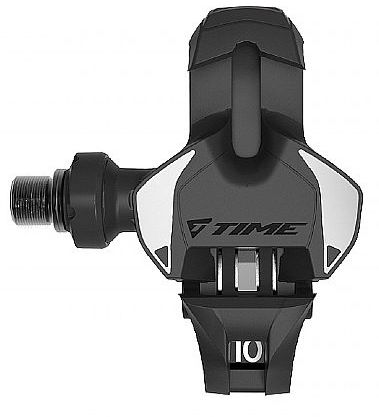
The Time XPro 10 is the most up to date version in the Xpresso series by Time. It gets its reputation from adjustability and lightweight design.
The XPro gives the best combination of racing dynamics and performance and value.
What makes this pedal so great?
For starters, let’s talk about power transfer.
The pedal has a large surface area that gives you a good platform to pedal efficiently and powerfully. The large surface area also gives you a big platform to clip in. This means you won’t have to guess where the pedal is.
After a few practice runs, you’ll be able to clip in without needing to look where the pedal is and you can have a powerful first stroke.
Newly added to the underside of the pedal is a plate that acts as a fairing. All this does is protect the adjustable tension carbon blade. And, it also makes the pedal more aerodynamic for those who regularly race.
Unlike the Xpro 12 and 15, the ten 10 was made with a steel spindle, which does add weight to the pedal but makes it easier on your wallet.
The pedal’s angular joint tension can be adjusted form three different positions, which range from beginner-friendly to a high-level, serious racer. The release angle can also be adjusted but this is dependent on what cleat you’re using.
The pedal’s stack height is low, which “makes” up for the weight from the steel spindle. And, it also gives you good pedaling clearance for all the tight corners you may encounter.
Cyclists who have bought these pedals like them because they are incredibly easy to clip in and out of. The pedal tracks where you unclip from so your foot goes right back to the same spot when you clip back in. The float works very well for cyclists who have knee pain. They report that the pedals don’t turn upside down like others, which keeps the float consistent. And lastly, cyclists praise these pedals since they are strong and durable. All say it’s a good option for a budget pedal.
I’d recommend this pedal if you’re looking for one that is easy to clip in and out of. This one won’t cost you hundreds of dollars and will still last you several years. It’s a good budget pick if that’s your main priority.
Road Bike Pedals – Buyer’s Guide
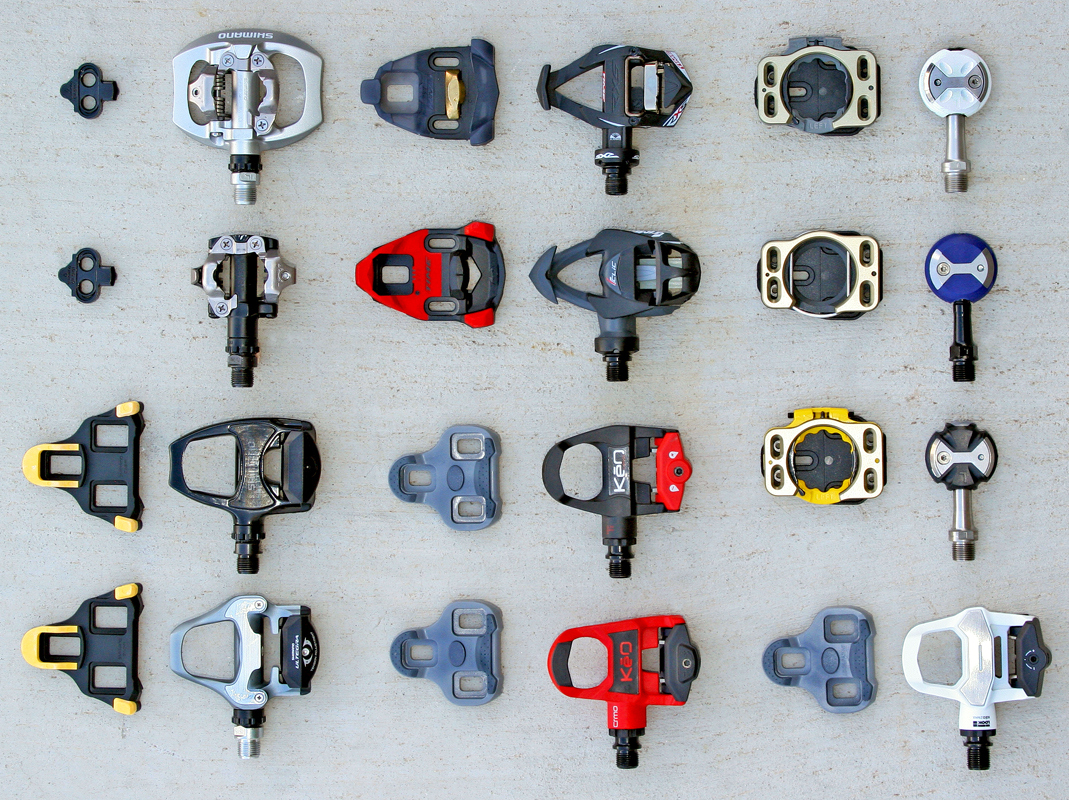
In this part of the article, I’ll help you pinpoint what pedal might be best for you. I’ll briefly describe how to use the pedals.
What are Clipless Pedals?
The word “clipless” is a little misleading since you actually clip-in to the pedal.
Clipless pedals were invented from the traditional toe-clip pedal which pervaded the ‘80s and early ‘90s of cycling around the world.
Compared to toe-clips, which use a clip and strap to hold your foot in place, clipless pedals use a cleat. This cleat “glues” the sole of your foot to the pedal automatically.
To put your foot into the pedal, just push your foot either forward or downward. You’ll hear some type of noise to confirm your clipped in. If you want to “unclip” your foot, just rotate your heel away from the bike.
After a few practices runs in your driveway or neighborhood, you’ll get the hang of it.
Most clipless pedals have the same technology, but of course, there are plenty of variations in design, construction, and price. I’ll summarize the types of pedal systems in the following sections.
Why Use Clipless Pedals?
You might ask yourself, “why do I need clipless pedals?”
This is a valid question since you used “regular” pedals on your bike growing up and strong cyclists from the ‘80s definitely didn’t use clipless pedals.
And, for those who are scared about using the pedals, just practice. You’ll fall over a few times but everyone falls off their bikes.
Now, back to answering the original question.
Simply put, using clipless pedals is far more comfortable and efficient.
Clipless pedals target different muscles than “regular” ones. This means that the key muscles are activated through the entire pedal stroke. Using the right muscles will propel you forward with greater force per revolution.
This would be ideal for triathletes because you’ll only use muscles for cycling on the bike and will keep your running legs feeling “fresh” off the bike.
What are Road Bike Pedals?
This section is more for first time buyers, but you can read if you want a refresher.
Mountain and road bike pedals are very different. Each was designed to help you ride through the specific terrain.
Mountain bike pedals are going to be wider in general because they have to accommodate riders who have to get on and off the bike. This would also be true for commuters as well.
Road bike pedals, are designed to be narrow since it’s unlikely you’ll get off your bike and start walking. That means the pedals really focus on supporting your foot while you’re riding. And it aims to give you stability and security while clipped in.
This would be important since you might be spending hours on the bike. The last thing you want to think about during an Ironman or transcontinental bike trip is your foot comfort and security.
For racing purposes, road bike pedals are ideal because they’re designed to keep your foot closer to the axle. This design makes your pedal stroke more efficient. And, the shape of the pedal itself is designed to help you corner tight turns.
Once you look past the basics of a road bike pedal, you’ll want to look into the weight, aerodynamics, and price. Those are often the deciding factors once you become “serious” about cycling and racing.
How to Buy Clipless Pedals
- Cleats
When you buy your pedals, you’ll also need to buy a cleat that is compatible with it. Road cleats come in a variety of designs that depend on the pedal. However, most have three bolts that “glue” your shoe to the pedal.
Three-bolt cleats have become the standard and most companies such as Shimano, Time, and Mavic use that arrangement. The exception is Speedplay, which uses four. For this cleat, you’ll need an adaptor. - Float
Float (measured in degrees) is how much your foot can move before it’s unclipped from your pedal.
Float allows your feet to move most comfortably and innately way while pedaling. This ensures that you put the least amount of stress on your knees.
Keep in mind that the more float you have, the more you’ll feel “locked” into a specific position, and the more effort it will take to unclip.
Don’t worry if you don’t your float degree since your pedal choice won’t lock you into a setting. You can tweak the float by trying different cleats and adjusting the settings on your pedals. - Release Tension
Release tension is the amount of force needed to unclip from your pedals.
For beginners, it’s recommended to start with a low tension so you can clip in and out easily.
For more advanced riders, you can increase the tension to feel more secure on the bike. - Stack Height
The stack height is measured from the middle of the pedal to the sole of the shoe. Ideally, you want a very low stack height because your foot will be closer to the axle. You’ll need to play around with your saddle height when you change pedals. This is because the stack height varies between pedals.
Pedal Systems
- Look Keo
Pedals use a three-bolt system and have a large surface area for the cleat. This does make walking in your cleats feel very awkward in transition. However, it does offer a good contact point for your feet. This type of pedal is best for road riding and racing. - Shimano SPD Double-Sided
Commuters and mountain bikers typically use Shimano SPD double-sided pedals. The dual-sided pedals let riders clip in easily and the cleat is recessed into the shoe. The recessed cleat makes it easy for commuters to walk. The contact surface is smaller than other road bike pedals. This means that the pedals don’t have a lot of power transfer. This pedal is best used for mountain biking, cyclocross, touring, and commuting. - Shimano SPD One-Sided
The Shimano SPD one-sided pedal system uses both the SPD and flat pedal design. This would be a good option for those who are nervous about using clipless pedals. Or, those who commute and want to quickly clip in their feet. This pedal system is heavier than other options since it is a dual system. These pedals are best used for social riding and off-road commuting. - Speedplay
Speedplay or “lollipops” are specifically designed for road riding and racing. The pedals get their power transfer from the cleat instead of the pedal itself. The Speedplay offers a lot of adjustabilities and the cleat can be moved in three separate places. They’re simple once set-up and double-sided to help you get in and out of the pedal more easily. The pedals are best used for road racing. - Shimano SPD SL
These pedals look similar to the Look Keo pedals, but the difference is in the cleats. The Shimano SPD SL cleats and pedals are much wider, which in theory offers more power transfer. The cleats come in three different colors, which code for different float levels. These are best used for road racing, racing, all-around riding, and commuting. - Time Xpresso
The Time Xpresso offers a huge amount of adjustability with a three-bolt cleat system. The cleat itself is rather large which means it’s very supportive. The pedal system has side-to-side adjustment and has a marginal distance between the sole and the pedal axle, which increases the efficiency. These are best used for racing and road riding.
